


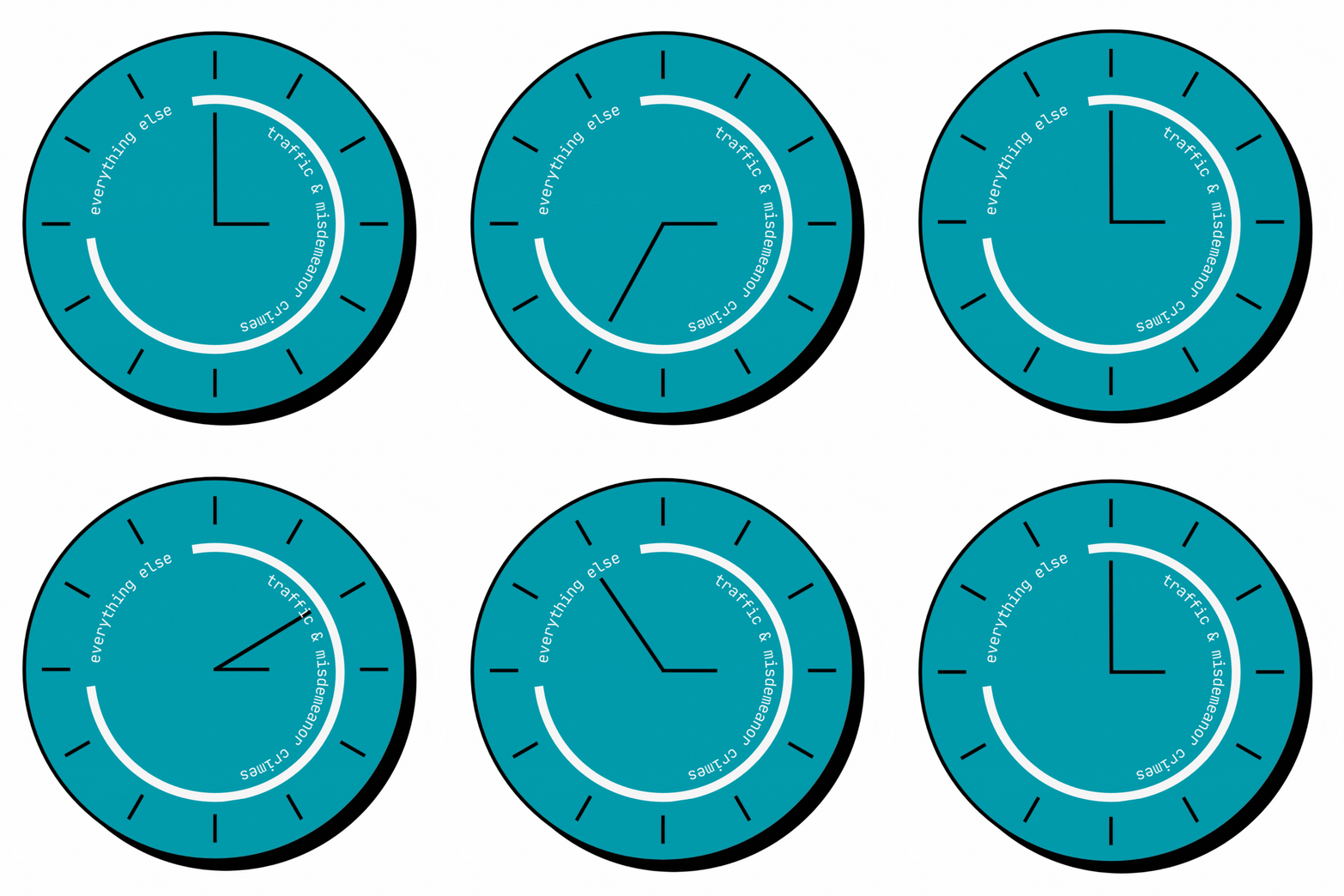
DC has two sets of prosecutors enforcing different parts of law, operating with different sets of resources and accountability.
The Office of the Attorney General for the District of Columbia is an elected official, accountable to DC voters, whose office is funded by District residents. The Attorney General is responsible for prosecuting offenses committed by children and certain adult offenses, including protest activity, traffic offenses, and some misdemeanors. The DC Attorney General also represents the District’s agencies when they are sued. The DC Attorney General appears before the DC Council to justify their budget and approach to how they prosecute crimes and seek justice, and report on how they sue corporations that pollute, run restorative justice programs for young people, and represent victims of domestic violence seeking protection orders.
Office of the United States Attorney for the District of Columbia
The Office of the United States Attorney for the District of Columbia (USAO-DC) is a federal office of prosecutors that enforce most felony offenses in the District. The DC Council and Mayor do not have any oversight role over the USAO-DC, and attorneys there do not have to be admitted to the DC Bar – a body that sets ethical standards and rules of professional conduct for lawyers who practice in DC. The USAO-DC can “shop” for venues: they can decide whether to try a case in the federal court, or the Superior Court of the District of Columbia. The USAO-DC has the vast resources of the federal government to prosecute low-level crimes.
The safety outcomes of our prosecution system are largely invisible to the public: other than episodic press statements around a particular case, there isn’t a lot of regular information shared that shows whether the public is satisfied with the system, how many people are diverted to treatment programs to break the cycle of crime, and how prosecutors are working with other stakeholders to increase safety. Instead, the debate over DC’s system of prosecution has centered on the USAO-DC declining to prosecute 56 percent of DC arrests, double the rate of our locally elected attorney general. Black residents, who are 96 percent of those sentenced for felony offenses, are almost exclusively impacted by a system that does not work as well as it could.
from bail to jail
This broken prosecution system impacts policies from “bail to jail:” whether someone is released pretrial, or sentences follow guidelines developed to promote fairness, or whether juries can reflect the diversity of the city are all impacted by what prosecutors and courts do.
In this section, the DC Justice Lab provides a series of ready made legislative and policy solutions that would ensure that prosecution is focused only on increasing safety and reducing the harm of justice system involvement by limiting its reach, scope and impact.
Issues
Charging Children as Adults
A judge, not a prosecutor, should decide whether a child should be charged as an adult.
Jury Selection
Jury service is a key civic duty – peremptory challenges prevent Black people from serving.
Mandatory Minimums
Mandatory minimums are extreme sentences that DC residents and victims want eliminated.
Case Screening
PRE-CHARGE CASE SCREENING BY PROSECUTORS CAN AVOID THE NEGATIVE CONSEQUENCES OF AN ARREST.
Decriminalizing Sex Work
Decriminalizing sex work is a matter of health, safety, and survival.
DC Crime Lab
A failing crime lab means innocent people are convicted of crimes, and victims do not receive justice.
tools
Offices of the United States Attorney of the District of Columbia
Council for Court Excellence
District of Columbia Courts